|
______________________________________________________________________________________________________
PLEASE HELP!
Child abduction from Mexico City
Follow this link
______________________________________________________________________________________________________
WARNING !
With Halloween fast approaching comes a warning to parents and kids regarding Sherwood brand Pirate's Gold milk chocolate coins imported from China. The Canadian Food Inspection Agency is warning the public not to eat, distribute or sell the candy.
It is sold across Canada by Costco and may also have been sold in bulk packages or as individual pieces at various dollar and bulk stores. The chocolate contains melamine which is the same chemical responsible for killing several babies in China, and sickening thousands more. The following link is from the Canadian Food Inspection Agency to provide you with further information.
http://www.inspection.gc.ca/english/corpaffr/recarapp/2008/20081008e.shtml
______________________________________________________________________________________________________
Tips For Parents
• Teach your children to trust their own feelings and assure them they have the right to say no if they sense something is not right.
• Listen carefully to your children's fears.
• Children should know that no one should approach or touch them in a way that feels uncomfortable, and if anyone does they should tell you immediately.
• Be sensitive to changes in your children's behavior.
• Know where your children are at all times. Be familiar with their friends and daily activities.
• Be alert to anyone who is paying an unusual amount of attention to your children or is giving them inappropriate gifts.
• Obtain references for babysitters and be generally cautious about people who are left to care for your kids.
Source: CBSNews.com / National Center For Missing And Exploited Children
______________________________________________________________________________________________________
What are the most important things parents should tell children about safety?
• Always check first with a parent, guardian, or trusted adult before going anywhere, accepting anything, or getting into a car with anyone.
• Do not go out alone. Always take a friend with when going places or playing outside.
• Say no if someone tries to touch you, or treats you in a way that makes you feel scared, uncomfortable, or confused.
Get out of the situation as quickly as possible.
• Tell a parent, guardian, or trusted adult if you feel scared, uncomfortable, or confused.
• There will always be someone to help you, and you have the right to be safe.
Source: Missing Kids
______________________________________________________________________________________________________
What should a parent know when talking to a child about safety?
• Don’t forget your older children. Children aged 11 to17 are equally at risk to victimization. At the same time you are giving your older
children more freedom, make sure they understand important safety rules as well.
• Speak to your children in manner that is calm and non-threatening. Children do not need to be frightened to get the point across.
In fact, fear can thwart the safety message, because fear can be paralyzing to a child.
• Speak openly. Children will be less likely to come to you about issues enshrouded in secrecy. If they feel that you are comfortable
discussing the subject at hand, they may be more forthcoming.
• Do not teach “stranger danger.” Children do not have the same understanding of “strangers” as adults; the concept is difficult for
them to grasp. And, based on what we know about those who harm children, people known to children and/or their families actually
present greater danger to children than do “strangers."
• Practice what you preach. You may think your children understand your message, but until they can incorporate it into their daily
lives, it may not be clearly understood. Find opportunities to practice “what if” scenarios.
• Teach your children that safety is more important than manners. In other words, it is more important for children to get themselves
out of a threatening situation than it is to be polite. They also need to know that it is okay to tell you what happened, and they won’t be
tattletales.
Sourcet: Missing Kids
______________________________________________________________________________________________________
Children should never be left unattended in or around parked cars. There are just too many risks.
Below are just some of the dangers children are exposed to:
• Being inadvertently backed over in a driveway or parking lot
• Being left in a vehicle where the temperatures can reach deadly levels in minutes
• Knocking the vehicle into gear and setting the vehicle into motion
• Strangulation by a power window, sunroof or power accessory
• Being taken by a stranger in the course of a car theft
• Hopping into a car trunk during an innocent game of hide-and-seek
• Carbon monoxide poisoning
• Finding matches that set the car aflame
• Leaving the vehicle alone to go to the bathroom, or to go looking for you
• Being kidnapped from the vehicle
Info credit: Kids and Cars
______________________________________________________________________________________________________
Spend 5 minutes each day to help keep your family safe:
• Visit the SAFENOWPROJECT website and join our mailing list to receive important updates on safety programming and public policy.
• Introduce your child to MOLLY MEERKAT(R) and her relationship to the daily practice of child safety and protection.
• Install internet monitoring software on your home computer or any computer used by a child.
• Review any internet monitoring/violation reports and discuss these with your child.
• Check out the web (www.nsopr.gov) for registered sex offenders in your area.
• Ask your child about his/her day—and really mean it. Use specific and open-ended questions to avoid yes/no answers so that your
child understands that you want to know the details of what is going on in their lives.
• Do some research on other adults in your child’s life. For example, if your child attends practice sessions or meetings during which
you are not present (e.g. clubs, sports, etc) make sure you have done the research on the adults in the room. In addition, show up
unexpectedly in the middle of it to observe the interaction.
• Talk about the news. If your child can hear the TV news, then they will occasionally hear of sexual assaults against children. Use
the opportunity to talk about it (without scaring him/her).
• Remind your child how much you love him/her and how precious they are to you.
• Review your child’s homework or grades with him/her.
• Call your child’s teacher to see how he/she is doing in school and if there are any issues your child may be struggling with .
• Review the TAKE FIVE SAFER STEPS TO BE SAFE NOW® with your child.
• Talk with your child about his/her closest friends. Know who your child spends most free time with during the school day.
• Establish a unique code word and teach your child how it will be used. For example, if someone other than the parent is asked
to pick up the child from school or other event.
• Teach your child to call 9-1-1 for emergencies and make sure they can recite their home address.
• Tell your children you are willing to listen, answer any question and keep an open mind (and mean it by not getting mad).
• If you go somewhere, set up a special meeting place if separated.
• Role play different scenarios that require your child to demonstrate what he/she would do in different dangerous situations.
• Ask your child how they define a “stranger.”
• Teach your child about good touches and bad touches AND that some inappropriate touches may feel good. Any inappropriate
touch should be reported to a parent or other authority figure.
• Teach your child it is OK to be rude if someone is trying to get them to do something they know is wrong or are uncomfortable doing.
• Have your children’s passwords for their email, social networking, IM accounts (be on your children’s friends list/buddy list if they
have
them). Your children’s friends might put you on their lists as well if they know you’re there for them (not “snooping” or “spying” on them).
• Know about your children’s friends’ parents – not just about the kids they hang out with – what about their families – especially if they
have play-dates etc? Ask your children open questions about their friend’s circumstances if they know about them.
• Check out whether your place of worship does background checks on authority figures – eg teachers, youth workers etc. Be as open
with your child about their experiences in a religious setting as you would for a school setting.
• Be honest with yourself about other family members/close friends of your family – think about your friends and family and the time they
spend with your children.
• Talk about their influences, eg musicians, sports stars etc – the good and the bad (ie good/bad music lyrics – why they are and what
they mean).
• Teach your children that they should never keep secrets about touching private parts of the body between grown-ups and kids.
• Talk to your children about internet use by their friends.
• If your child is going to a friend’s house, always have a contact number and spend five minutes talking to the adult at that home.
• Tell your child about your day and encourage then to tell you about theirs, this openness will develop into a habit.
• Don’t ever just drop your child off alone in front of a particular location, like a movie theater or a mall, too meet with their friends. Think
about the ramifications for five minutes before explaining to the child why this is not safe.
• Have a five minute group conversation with your child and their friends when they are together in your home or car. Insist and persist
on the conversation.
• Know the route your child walks to and from the bus stop, the playground, school or any other location.
• Tell them it is OK to yell or scream for help if they feel in danger or see a friend in danger.
• Tell them that being polite to strangers is good only if a parent is present otherwise talking to a stranger is dangerous and should not
be done.
• Take five minutes to observe your child while they play, do homework or watch TV. It’s good to know their moods during different
activities. You’ll more easily recognize changes.
• Encourage your child to tell you if they believe that their friend is ever in need of help.
• Explain the perils of walking away from any group activity.
• In a public place, always take five to accompany your young child to the restroom.
• Take five minutes to evaluate (through observation or conversation) any adult that your child is or will have contact with.
• Enroll your child in a self-defense class.
• Read a book to your child that emphasizes self-disclosure (e.g. child tells his parent something bad happened, something
scared him, etc.).
• Invade your child's privacy occasionally. Look through their book bag, listen in on a conversation, read a few emails, etc.
• As you observe newsworthy reports on tv, radio or news print, forward those articles to persons if interest to be distributed where
appropriate.
• Share current news reports with children (where appropriate) about predators arrests and the circumstances surrounding the arres
to point out the situation to avoid.
• I thought that maybe asking kids each day who wanted to play with them both kids and adults as well as did anyone give you anything
special today, or make sure you always tell mommy or daddy if you make any special grown-up friends.
• Most abusers are known to kids; therefore, education around sexual play is an important topic to address, not only to teach about
inappropriate adult behavior but inappropriate child and teenager behavior.
Info credit: Safety Now Project
______________________________________________________________________________________________________
FOR MORE INFORMATION ON MORE SAFETY TIPS, FEEL FREE TO VISIT:
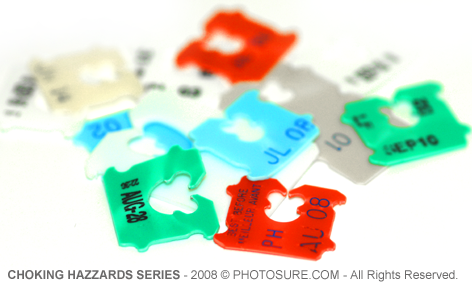
Choking Hazzards
Pedriatrics About
Safety Now Project
Kids and Cars
Missing Kids
For further details, please feel free to contact us at info@child1st.ca
- Help protect our children - Share your valuable information -
|